
Real Ink vs Laser-Printed Handwriting: How to Tell the Difference
Learn how real ink compares to laser-printed handwriting fonts, why recipients notice the difference, and which campaigns benefit most from authentic pen-written mail.
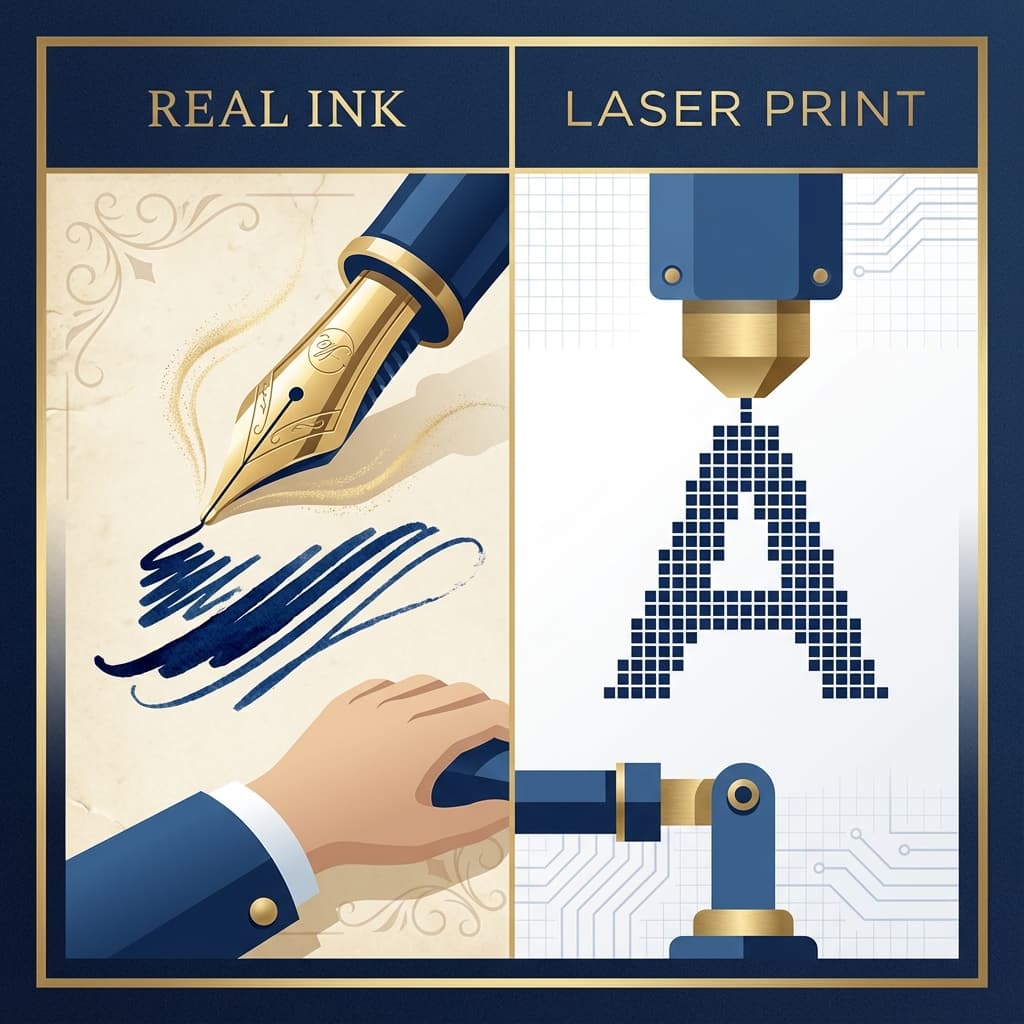
There are many services that claim to send "handwritten" cards. Most of them are misleading: they use "handwriting fonts" and laser printers rather than a real pen on paper.
Here is how you can tell the difference, and why it matters for your brand.
This matters most in campaigns where trust, sincerity, or premium positioning is doing the heavy lifting: thank-you notes, founder outreach, referrals, apology mail, and high-value client retention.
The Microscope Test
Laser Printed "Handwriting"
- Uniformity: Every "a" looks exactly the same.
- Flatness: The ink sits perfectly flat on top of the paper fibers.
- Dot Pattern: Under a magnifying glass, you can see the tiny CMYK dots from the printer.
The Result: The recipient subconsciously knows it's a fake. It feels like a mass-marketing attempt, which can actually damage trust.
Handwrite's Pen Plotters
- Variation: Our robots introduce micro-variations in stroke and pressure.
- Real pen, real ink: Every card is written with a real pen holding real ink — not toner dots or an inkjet imitation.
- Texture: You can feel the tactile indentation of the pen tip on the card stock.
Why Authenticity Wins
If you are sending a thank you note, an apology, or a high-stakes sales pitch, sincerity is your currency. A fake handwritten font signals "I wanted to look personal, but I didn't want to do the work."
A real ink plot signals: "I care enough to make this real."
At Handwrite, we use exclusively:
- Real pens writing on real paper — no simulated handwriting fonts
- A6 postcard stock chosen to carry pen ink cleanly
- Pen plotter robots built for consistent pressure and line weight
This ensures every card passes the thumb test.
Best use cases for real-ink mail
- Thank-you notes and client appreciation — where the gesture itself matters as much as the wording.
- High-value outbound or ABM — where fake-looking personalization can do more harm than good.
- Retention and renewal outreach — where trust and perceived effort matter.