
Pen Plotter Technology Explained: How Real Handwritten Mail Is Produced
Understand how pen plotter technology works, how real handwritten mail is produced, and why it differs from laser-printed handwriting fonts.
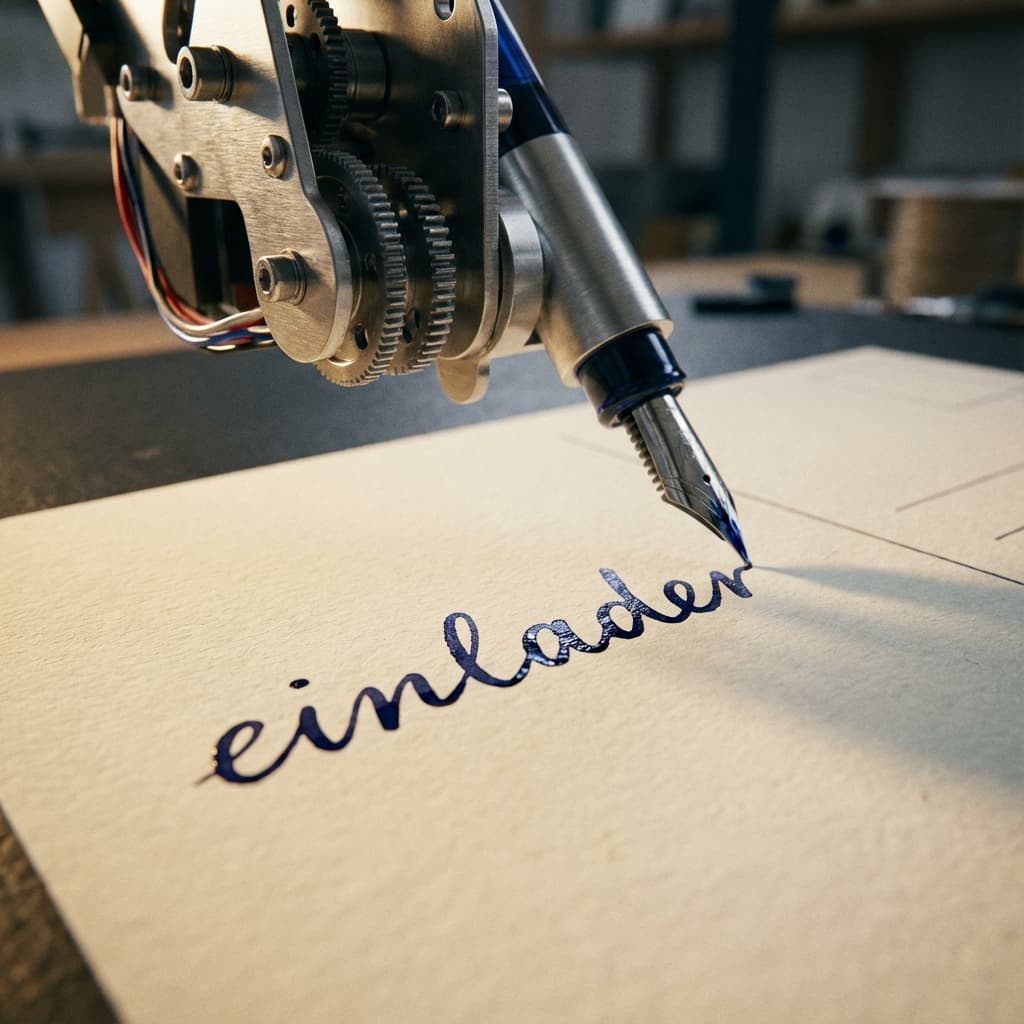
When you order handwritten cards online, it's natural to wonder: "Is it really handwritten?" The answer depends entirely on the technology behind it. Here's how Handwrite creates genuinely authentic handwriting—and why it matters.
If you are researching pen plotter technology, the core distinction is simple: a pen plotter physically moves a real pen over real paper, while a printer only simulates the look of handwriting with toner or ink dots.
Two Technologies, Very Different Results
Laser Printers with "Handwriting Fonts"
Many competitors use laser printers with specially designed fonts that mimic handwriting. While cheaper to produce, recipients can usually tell:
- Perfect uniformity — Every "a" looks identical
- Flat ink — Toner sits on top of paper fibers
- Dot patterns — Under magnification, you see tiny printer dots
- No texture — Paper feels smooth, mechanical
The Result: Recipients subconsciously recognize it as fake, which can damage trust and make your outreach feel like mass marketing.
Pen Plotters with Real Ink
At Handwrite, we use pen plotter robots—precision machines that physically write with a real pen on real paper:
- Micro-variations — Each letter varies slightly, like human handwriting
- Real ink on paper — A real pen tip laying ink on the surface, not toner fused on top
- Texture you can feel — Pen pressure creates tactile indentation
- No dots — Continuous ink strokes, no pixelation
The Result: Cards pass the "thumb test"—run your finger over the writing and feel the genuine pen marks.
The Microscope Test
If you examined both types under magnification:
| Feature | Laser Print | Pen Plotter |
|---|---|---|
| Letter consistency | Identical | Natural variation |
| Ink application | Dots (CMYK toner) | Continuous lines |
| Paper interaction | Sits on top | Absorbed into fibers |
| Tactile feel | Smooth | Textured |
| Under 10x magnifier | Dot pattern visible | Clean ink strokes |
How Our Pen Plotters Work
1. Message Conversion
Your message is converted into precise movement coordinates—mapping each stroke of every letter.
2. Handwriting Styles
We've developed multiple handwriting styles, each with its own character:
- Realistic (Human) — Our flagship style with natural pressure variation
- Classic (Script) — Flowing cursive with connected letters
- Elegant (Calligraphy) — Graceful strokes for formal occasions
- Neat (Print) — Clean, highly legible letters
3. Real Pen, Real Ink
Our plotters write with a real pen holding real ink. Combined with the pressure data we preserve from the original recordings, this gives each card:
- Natural line weight variation
- Continuous ink strokes rather than dot patterns
- A physical mark made by a pen tip, not a laser or inkjet
4. Quality Card Stock
We use A6 postcard stock chosen to carry real-pen ink cleanly, so the writing shows off and the card feels like a card — not a receipt.
5. Humanization Layer
Our software adds subtle micro-variations to prevent robotic uniformity:
- Slight baseline drift (like tired hands)
- Tiny pressure changes
- Natural letter spacing variations
Where pen plotters make the biggest difference
Pen plotter technology is most valuable when the recipient is likely to notice authenticity: customer thank-you campaigns, founder mail, premium brand outreach, referral thank-yous, and other moments where the physical feel of the card supports the message.
Why Authenticity Matters
When you're sending thank you notes, client appreciation cards, or sales outreach:
- Trust is currency — Fake handwriting signals "I wanted to look personal, but didn't put in effort"
- First impressions stick — Authentic = authentic business relationship
- Referrals come from feeling valued — Genuine gestures create genuine loyalty
Quality Assurance
Every card we produce goes through quality inspection:
- Visual check — Ink flow, smudges, alignment
- Touch test — Paper feel, pen impression depth
- Readability — Clear, legible handwriting
- Personalization accuracy — Correct names and details
See It For Yourself
The best way to understand the difference is to experience it. Order a sample and judge for yourself—we're confident you'll feel the quality.